Businesses for Sale in French-Speaking Switzerland: 2026 Market Overview
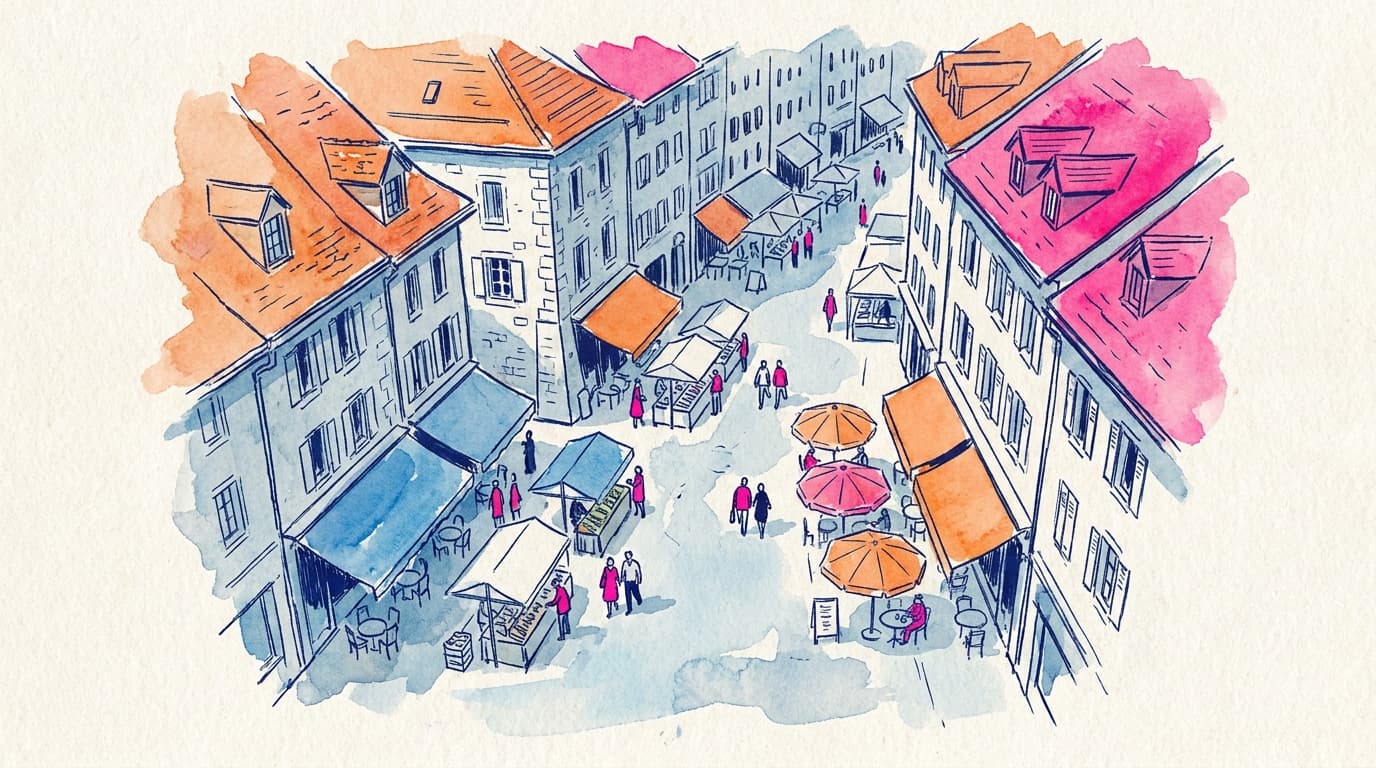
A kiosk in central Lausanne at CHF 125'000. A lounge restaurant in Nyon at CHF 345'000. A 65 m² café-bar on the left bank of Geneva at CHF 120'000. The market for businesses for sale in French-speaking Switzerland, in 2026, is neither in crisis nor overheating. It is in transition.
For prospective buyers, this is precisely the right moment to look at what is happening on the ground.
An active market, driven by Vaud and Geneva
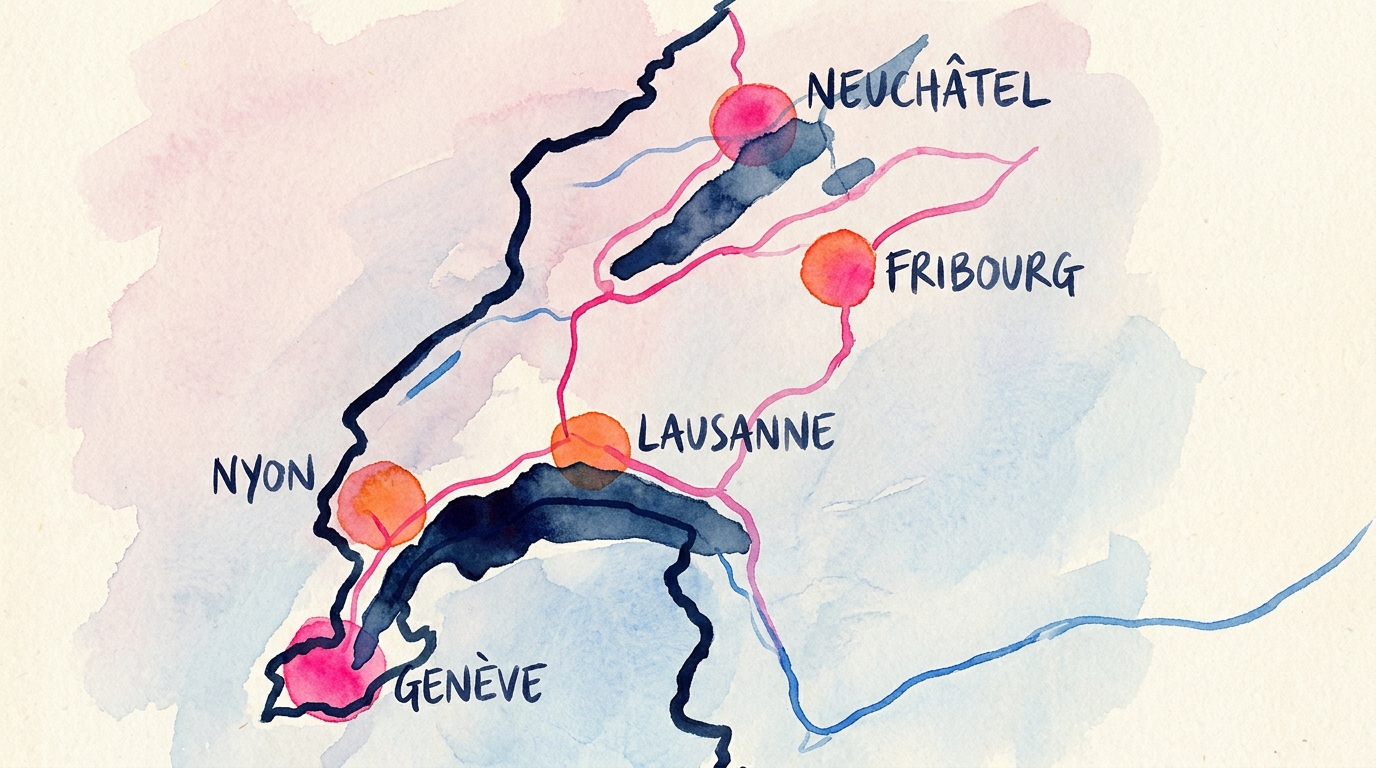
The cantons of Vaud and Geneva account for the majority of business listings in French-speaking Switzerland. Lausanne, Nyon, and Geneva-city dominate the offer, with diverse profiles: convenience stores, hospitality, specialized retail. Fribourg rounds out the picture, particularly for family transfers in artisanal sectors. Neuchâtel and Valais show smaller volumes but often lower entry prices.
This dynamic stems from a clear demographic context. According to the Federal Statistical Office, Switzerland has more than 600,000 SMEs, roughly half of them family-owned. The 65-and-over population is set to grow by approximately 50% between 2024 and 2055, with peak annual growth expected in 2029. This transition is hitting independent owners' balance sheets directly.
The PwC Switzerland 2025 succession study goes further: one succession out of two takes place without a structured plan. In practice, many owners reach 65 without having prepared their exit. They sell under time pressure, and these are exactly the deals well-prepared buyers can capture on negotiable terms.
Digitalization has reshuffled the deck. Some brick-and-mortar businesses have weathered the e-commerce wave better than expected, especially those that bet on customer experience and local roots. Others still suffer from the post-pandemic shift in habits. Two businesses in the same sector on the same street can show radically different trajectories depending on positioning.
What does a business in French-speaking Switzerland really cost?
The range is wide, and that often surprises first-time buyers. A specialized kiosk and an established lounge restaurant are not the same market.
| Business type | Location | Indicative price | Characteristics |
|---|---|---|---|
| E-cigarette kiosk | Canton of Vaud | CHF 80'000 | Growing sector, loyal customer base |
| Central kiosk | Lausanne center | CHF 125'000 | Premium location, high foot traffic |
| Café-bar | Geneva left bank | CHF 120'000 | 65 m², established clientele |
| Women's ready-to-wear | Neuchâtel | CHF 199'000 | Specialty boutique, stock included |
| Lounge restaurant | Nyon | CHF 345'000 | Full establishment, terrace |
These real-world examples illustrate a typical range: CHF 80'000 to CHF 350'000 covers most of the romand market for medium-sized goodwill deals. Below that, you find quick sales or lease takeovers. Above it, you enter the territory of structured SMEs, where balance sheets need careful analysis.
Average floor space for sold businesses sits between 65 and 131 m², matching structures that an individual buyer or a couple can run. No big chains, no dominant franchisor. Human-scale commerce. The methods to translate these listing prices into a defensible valuation are detailed in our guide to valuing a business in Switzerland, which combines sector multiples, DCF, and the practitioners' method.
Which sectors are attracting buyers in 2026?
Not all sectors are equal. Some accumulate favorable signals; others call for a more cautious analysis.
Hospitality: resilient but demanding
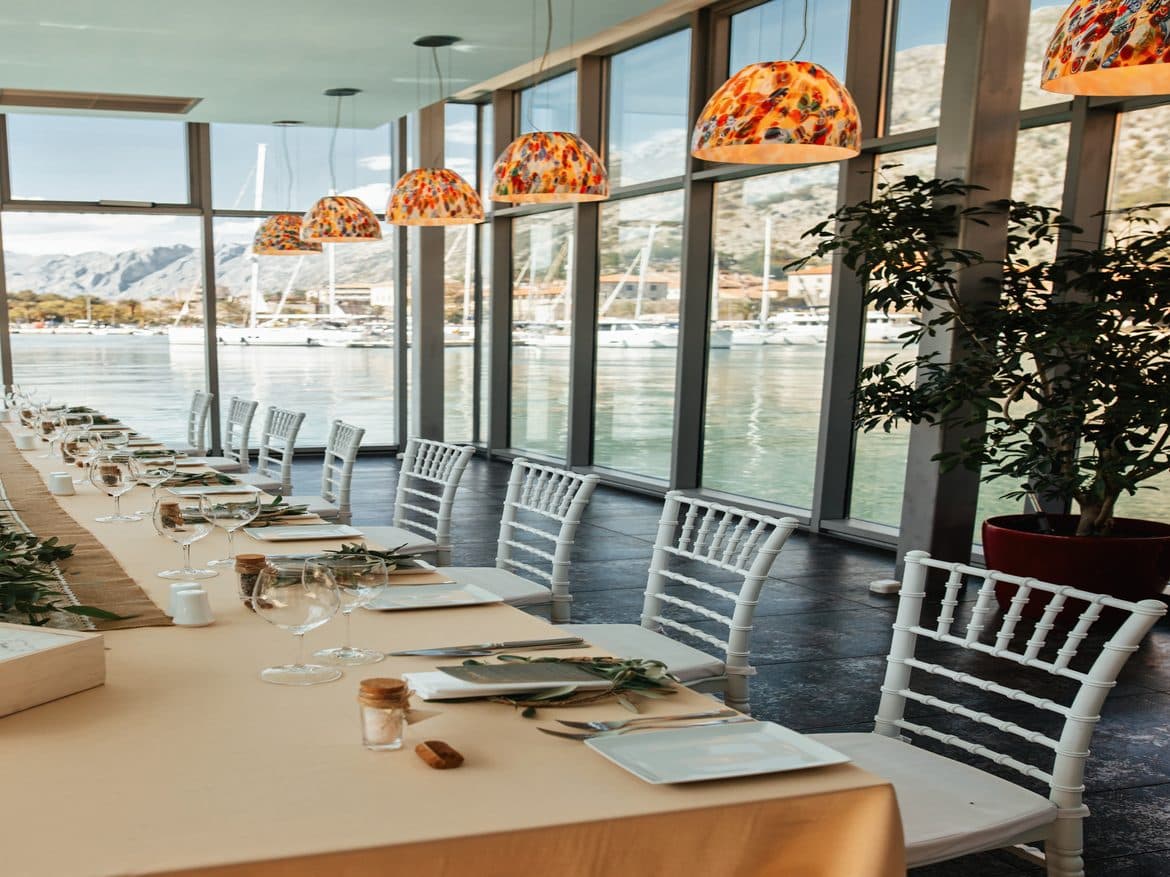
Hospitality remains the most represented sector in romand listings. It is also the most complex to take over. A restaurant goodwill in Nyon at CHF 345'000 is a significant entry ticket, with high operating costs and strong dependence on location and team.
That said, well-located establishments in dense urban areas continue to attract motivated buyers. The key: verify the commercial lease above all else. A restaurant with a lease expiring in 18 months is worth far less than one secured for 5 years. Net margins in romand hospitality often run between 5% and 12% of revenue, leaving little room for cost surprises. Our dedicated article on taking over a restaurant in Switzerland details the sector-specific traps.
Specialized retail: niches that hold up
Specialty boutiques (women's ready-to-wear, e-cigarettes, natural cosmetics, specialty food) show steady demand. A specialized e-cigarette kiosk at CHF 80'000 in the canton of Vaud, for example, is an accessible entry point for a first-time buyer. A women's ready-to-wear boutique in Neuchâtel at CHF 199'000 with stock included illustrates the mid-range segment.
General retail suffers more from online competition. The rule of thumb: the more value-add ties to human expertise or physical experience, the better the business resists digital pressure. Conversely, businesses selling standardized products available everywhere online are structurally under pressure.

What really drives a sale
Understanding why a business is being sold is already half the work for a serious buyer.
The most common motivations, in the order observed on the romand market:
- Owner retirement: the main, structural cause, fueled by the wave of independent baby-boomers. This is the reason behind most family-business sales.
- Career change: the seller is moving on to something else, not necessarily because the business is doing badly. Common in hospitality and services.
- Health issues: frequent in physically demanding trades (hospitality, bakery, retail with strong on-site presence).
- Disagreement between partners: often underestimated, but a regular source of fast-track sales, sometimes at discounted prices.
Bottom line: A business sold for retirement after 15 years of operation is fundamentally different from one put up for sale after 2 years of losses. Ask the question directly. The answer says a lot about what you are actually buying.
For more depth, the SME portal of the Swiss Confederation (SECO) publishes practical resources on business succession, especially to anticipate the tax implications of a takeover.
Three legal points specific to the romand market
The buying process (search, financial analysis, due diligence, negotiation, financing, signing) follows a relatively standard playbook in Switzerland, which we detail in our guide to buying a business in Switzerland. Three points deserve particular attention in the romand 2026 context.
Article 333 CO: employment contracts follow you
Article 333 of the Swiss Code of Obligations enforces the automatic transfer of employment contracts to the buyer, with all attached rights and obligations (seniority, accrued vacation, LPP/pension rights, dismissal protection). It applies even against the buyer's will. In plain terms: if the bakery has three employees, you inherit them, along with any pending HR dispute. An applicable collective bargaining agreement must be respected for at least one year.
The commercial lease: more structuring than it seems
Swiss law protects commercial tenants, but the property owner can refuse to transfer the lease to a buyer if the profile does not suit them. Direct consequence: a goodwill deal worth CHF 200'000 loses most of its value if the lease does not follow. Before any firm offer, require the seller to obtain written confirmation from the property owner regarding the planned transfer.
Cantonal authorizations: 2 to 6 months
An operating permit for a public establishment in Geneva is not obtained on the same timeline as in Lausanne, nor with the same documentation. For hospitality, cantonal authorizations (license, hygiene, alcohol) typically take 2 to 6 months depending on canton and case complexity. Anticipate these delays from the letter of intent stage: closing with an authorization still pending is a real operational risk.
Cantonal aid and acquisition support
Standard bank financing does not cover everything. French-speaking Switzerland has an ecosystem of public and semi-public aid that first-time buyers rarely tap, even though it can be the difference between an approved and a rejected file.
Cautionnement Romand is the most structuring tool. This regional cooperative guarantees up to CHF 1 million in bank credit for romand SMEs, reassuring banks on files where personal equity or collateral is limited. Its cantonal branches (FAE in Geneva, affiliated bodies in other cantons) review takeover files and process them within a few weeks.
At the cantonal level:
- Vaud: the Department of Economic Promotion and Innovation (SPEI) supports buyers, and the Foundation for Technological Innovation (FIT) finances files with a tech component. Innovaud focuses on start-ups and innovative scale-ups.
- Geneva: FAE (Fondation d'aide aux entreprises) finances creations and takeovers in the canton. Fondetec specifically targets businesses in central Geneva. OPI supports innovative and industrial SMEs.
- Fribourg, Neuchâtel, Valais, Jura: each canton runs an economic-promotion service offering preferential-rate loans or guarantees for local takeovers.
Practical reflex: file a request with Cautionnement Romand in parallel with the bank application, not after a rejection. This speeds up review and signals to the banker that the file is seriously structured.
Challenges and blind spots not to ignore
The romand market is attractive, but it carries specific risks every buyer should keep in mind.
Personal goodwill overvaluation is the most common pitfall. Some sellers price in years of personal work, a supposedly loyal clientele, a local reputation. These elements have real value, but it is often overstated. Test the robustness of the customer base: how many clients return because they love the business, and how many because they love the current owner? An independent hairdresser sale illustrates this point: if the seller is also the lead stylist, part of the value walks out with them.
Hidden social liabilities are the second classic trap. You buy a bakery and inherit unpaid social-security contributions. Or an employee dispute that has been brewing for six months. Always request a debt-collection register extract on the seller, plus up-to-date confirmations from AVS, LPP, and occupational accident insurers.
Finally, the asset deal vs. share deal trade-off has significant tax consequences for both seller and buyer. Whether you buy the business goodwill (asset deal) or the shares of a Sàrl/SA (share deal), taxation, liability for prior debts, and the perimeter transferred change materially. The topic is treated in depth in our valuation guide, which works through both scenarios with concrete numbers.
What will happen in 2026 and beyond?
The trend is clear: the number of sales will rise. The retirement wave of baby-boomer owners is not a projection, it is a documented demographic fact per the OFS. According to romand economic news, this dynamic already shapes the transactions observed in 2025.
For buyers, this is a structural opportunity. More sellers means more choice, and potentially more negotiable prices for businesses that did not anticipate their transmission. An owner who sells at 65 with a well-prepared successor gets a better price than one who sells in a hurry at 68 without a backup plan.
The impact of artificial intelligence and e-commerce on physical businesses is uneven. Activities requiring physical presence, expert advice, or sensory experience continue to hold up. Those selling pure commodity are under pressure. The divide will widen.
The most underrated piece of advice: visit the business at several times during the week, at different hours, before making an offer. Numbers in a balance sheet do not replace what you see when you observe customer flow on a Tuesday morning at 10 versus a Friday evening at 6.
The romand market in 2026 rewards prepared buyers. Those who have done their analysis, understand the mechanics of commercial leases, and have their financing structured before they visit. Good deals exist. They are not found by chance. PME-Market lists several hundred active listings in French-speaking Switzerland, classified by sector and canton, so this search starts on solid ground.
Frequently asked questions
What is the average price of a business for sale in French-speaking Switzerland?
Prices vary significantly by business type and location. In 2026, French-speaking Swiss business goodwill typically trades between CHF 80,000 and CHF 350,000 for medium-sized operations. A specialized kiosk in Vaud costs around CHF 80,000, a 65 m² café-bar in Geneva approximately CHF 120,000, and an established lounge restaurant in Nyon up to CHF 345,000. Below CHF 80,000, you mostly find lease takeovers or quick sales driven by time pressure.
Which sectors offer the best opportunities for buying a business in French-speaking Switzerland?
In 2026, well-positioned hospitality in urban areas, specialized retail (e-cigarettes, cosmetics, specialty food), and women's fashion with strong branding show the best prospects. These sectors better resist online competition because they offer expertise or experience that online shopping cannot replicate. Hospitality remains operationally demanding, but premium locations in Lausanne, Geneva, and Nyon continue attracting serious buyers.
What are the main risks when buying a business goodwill in French-speaking Switzerland?
The number one risk is the commercial lease. If the property owner refuses to transfer the lease to the new operator, the business goodwill loses its core value. Other risks include hidden liabilities (unpaid social contributions, employee disputes), overstated seller goodwill, and administrative delays for operating permits, especially in hospitality. Thorough due diligence with a business acquisition specialist is essential before any signature.
How do you finance the purchase of a business in French-speaking Switzerland?
Cantonal and cooperative banks in French-speaking Switzerland (BCV, BCGE, Raiffeisen, BCN, BCVS) regularly finance business takeovers. They typically require a personal-equity contribution of 25 to 40 % of the acquisition price depending on the borrower profile, plus a solid business plan and collateral. The Cautionnement Romand can guarantee up to CHF 1 million in bank credit, and is best filed in parallel with the bank application. Several cantons also offer aid through their economic-promotion services (FAE and Fondetec in Geneva, FIT and SPEI in the canton of Vaud).
Why is the number of businesses for sale increasing in French-speaking Switzerland in 2026?
The primary reason is demographic. A large portion of independent business owners belongs to the baby boomer generation, reaching retirement age between 2024 and 2028 in significant numbers. Many lack an identified family successor and are seeking an external buyer. This structural trend mechanically increases available listings, offering more choice to prospective buyers.
Related articles

Financing an SME Acquisition in Switzerland: 7 Proven Solutions
Bank loan, seller financing, public sureties, leasing, equity: 7 concrete solutions to finance your SME acquisition in Switzerland.
Selling Your Business Without a Broker: Is It Possible in Switzerland?
Selling your Swiss business without a broker is legally possible and saves 10-15% of the sale price. Learn the key steps, legal requirements, and how to value your business.